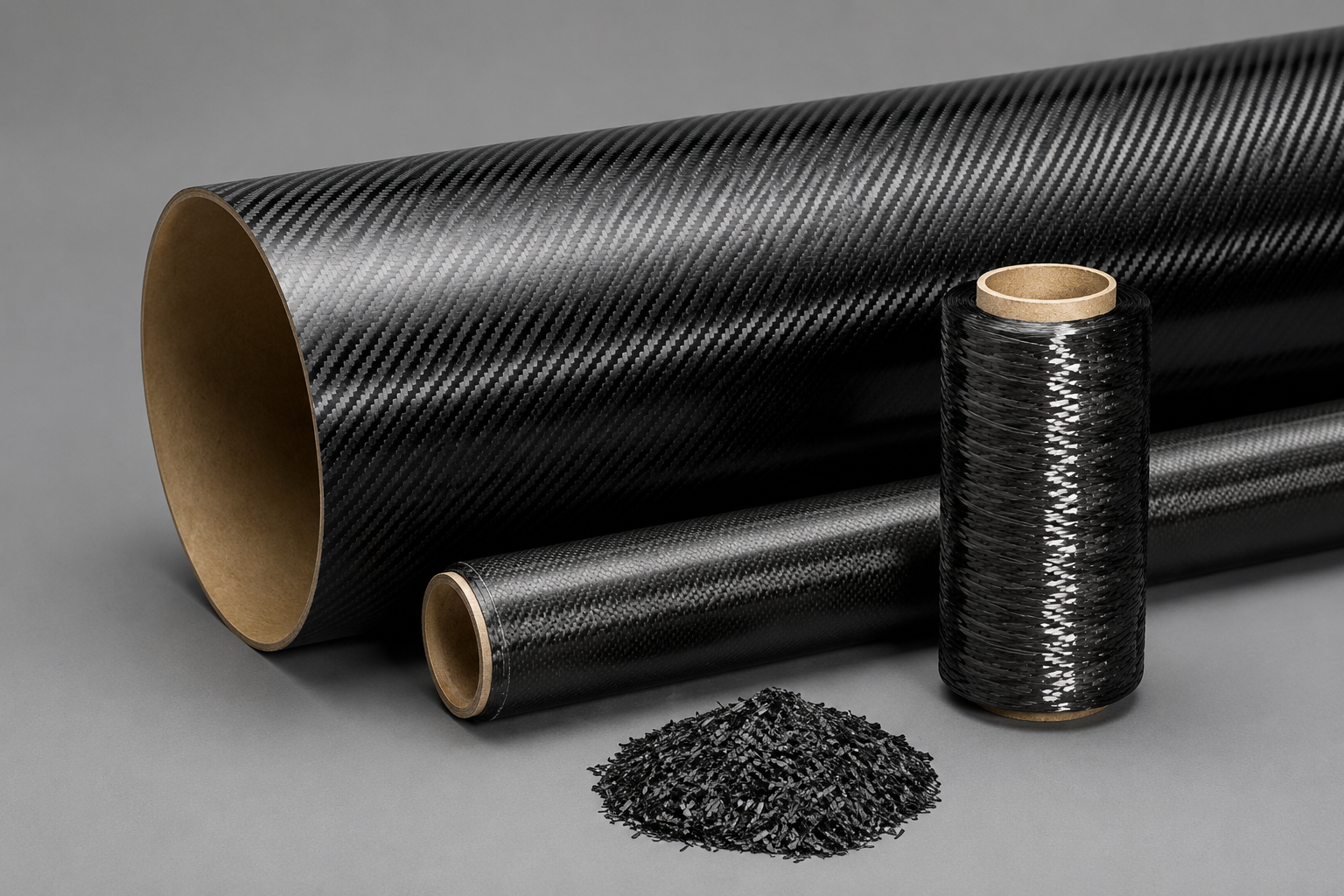
Japanese company Teijin has unveiled a new carbon fiber reinforced thermoset plastic (CFRP) that combines high mechanical strength with self-healing capabilities and recyclability.
Unlike conventional carbon fiber composites, the new material can repair damaged areas through brief heating to a specified temperature. This technology enables components to be repaired instead of replaced, extending product lifespan while reducing material consumption.
Another key advantage of the new CFRP is its recyclability. Teijin has developed a proprietary polymer resin that retains the excellent mechanical properties of traditional thermoset composites while allowing the material to be recycled through a simple chemical decomposition process. This innovation supports more sustainable manufacturing and circular use of composite materials.
Traditional CFRPs, which are produced by impregnating carbon fibers with thermoset resins, cannot be melted or reshaped after curing. As a result, end-of-life components are typically incinerated or disposed of in landfills, creating both environmental and economic challenges.
According to Teijin, the new material is expected to benefit industries where lightweight construction and high strength are critical, including aerospace, automotive manufacturing, and sporting goods production.
The company plans to begin providing samples of the new CFRP in 2028. In the meantime, Teijin will continue its research in collaboration with universities and research institutes while seeking partners for joint development projects aimed at commercializing the material.
The innovation reflects one of the key trends in advanced materials development: creating high-performance composites that are not only durable and lightweight but also repairable and recyclable, helping manufacturers improve both product performance and environmental sustainability.
Source
Unlike conventional carbon fiber composites, the new material can repair damaged areas through brief heating to a specified temperature. This technology enables components to be repaired instead of replaced, extending product lifespan while reducing material consumption.
Another key advantage of the new CFRP is its recyclability. Teijin has developed a proprietary polymer resin that retains the excellent mechanical properties of traditional thermoset composites while allowing the material to be recycled through a simple chemical decomposition process. This innovation supports more sustainable manufacturing and circular use of composite materials.
Traditional CFRPs, which are produced by impregnating carbon fibers with thermoset resins, cannot be melted or reshaped after curing. As a result, end-of-life components are typically incinerated or disposed of in landfills, creating both environmental and economic challenges.
According to Teijin, the new material is expected to benefit industries where lightweight construction and high strength are critical, including aerospace, automotive manufacturing, and sporting goods production.
The company plans to begin providing samples of the new CFRP in 2028. In the meantime, Teijin will continue its research in collaboration with universities and research institutes while seeking partners for joint development projects aimed at commercializing the material.
The innovation reflects one of the key trends in advanced materials development: creating high-performance composites that are not only durable and lightweight but also repairable and recyclable, helping manufacturers improve both product performance and environmental sustainability.
Source